
5 Curtain Mistakes That Make Your Room Look Smaller (And How to Fix Them)

Curtains can completely transform the appearance of a room. The right fabric, color, length, and hanging style can make a small bedroom or living room feel taller, brighter, and more spacious. However, the wrong choices can have the opposite effect. Even a beautifully decorated room can feel cramped when its window treatments are poorly selected.
Many homeowners focus on furniture, wall colors, and decorative accessories but overlook how much curtains influence the proportions of a space. Heavy fabrics, incorrect lengths, bulky designs, and poorly positioned curtain rods can make windows appear smaller and ceilings feel lower.
Understanding the most common curtain mistakes that make a room look smaller can help you create a more open and balanced interior without renovating or purchasing expensive furniture.
Here are five curtain mistakes to avoid and practical ways to correct them.
1. Hanging Curtain Rods Too Low
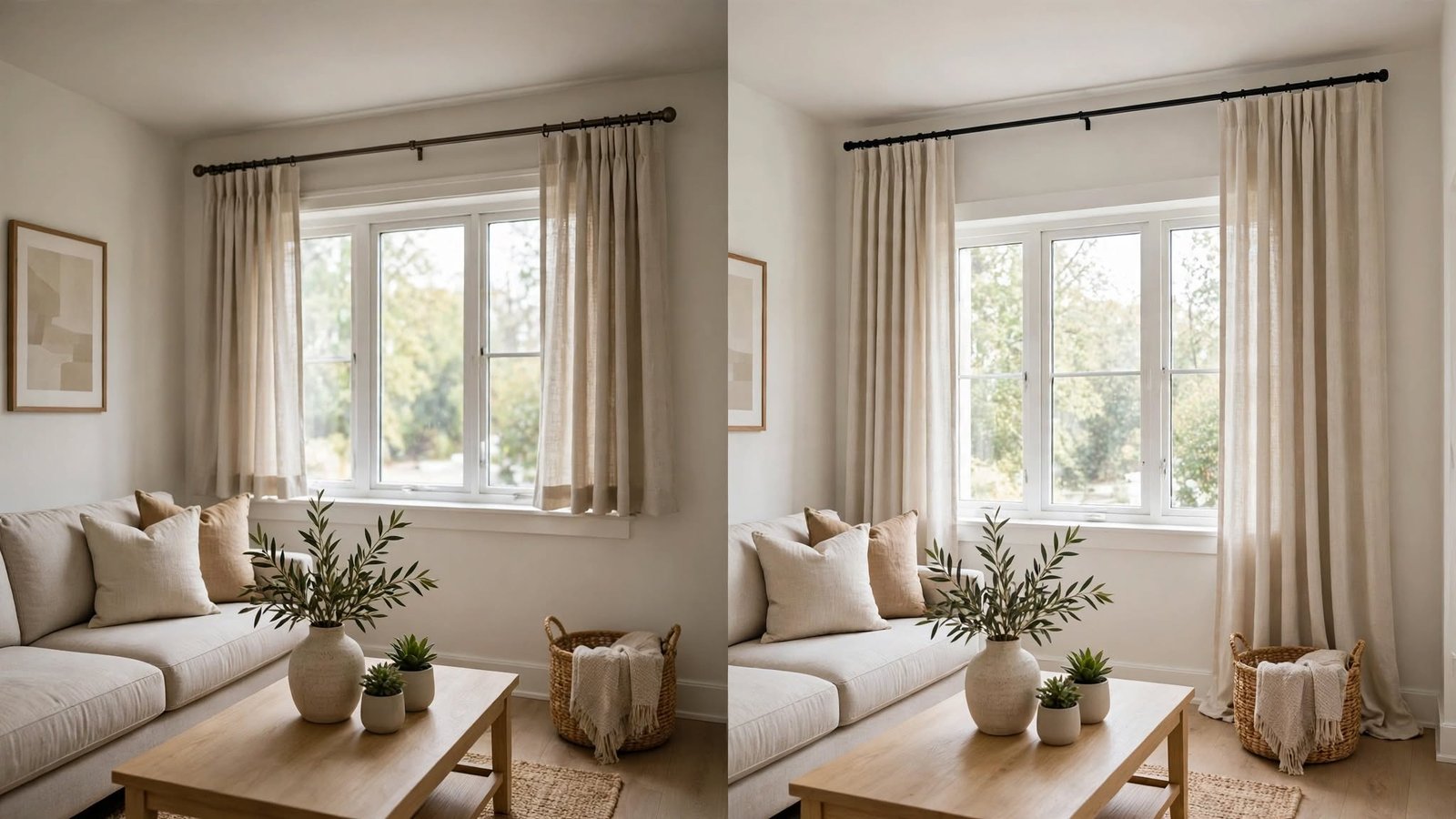
When curtains begin too close to the window, they visually shorten the wall and make the ceiling appear lower. This can make an already compact bedroom or living room feel even more confined.
Why It Makes Your Room Look Smaller
The position of your curtain rod influences how the eye reads the height of a room. A low curtain rod creates a shorter visual line, making the window and surrounding wall appear compressed.
This mistake is particularly noticeable in apartments with low ceilings or small windows.
How to Fix It
Install your curtain rod higher than the window frame, ideally around 4–6 inches below the ceiling or close to the ceiling line when appropriate. If you have very high ceilings, position it proportionally rather than placing it excessively high.
Choose long panels that extend from the rod to the floor. This creates a continuous vertical line and gives the room a taller appearance.
Styling tip: Use ceiling-mounted curtain tracks for a clean, contemporary appearance. They create an elegant floor-to-ceiling effect without adding visual clutter.
2. Choosing Curtains That Are Too Heavy and Thick
Thick curtains can create a luxurious atmosphere, but using excessively heavy fabrics in a small room can make the entire space feel crowded.
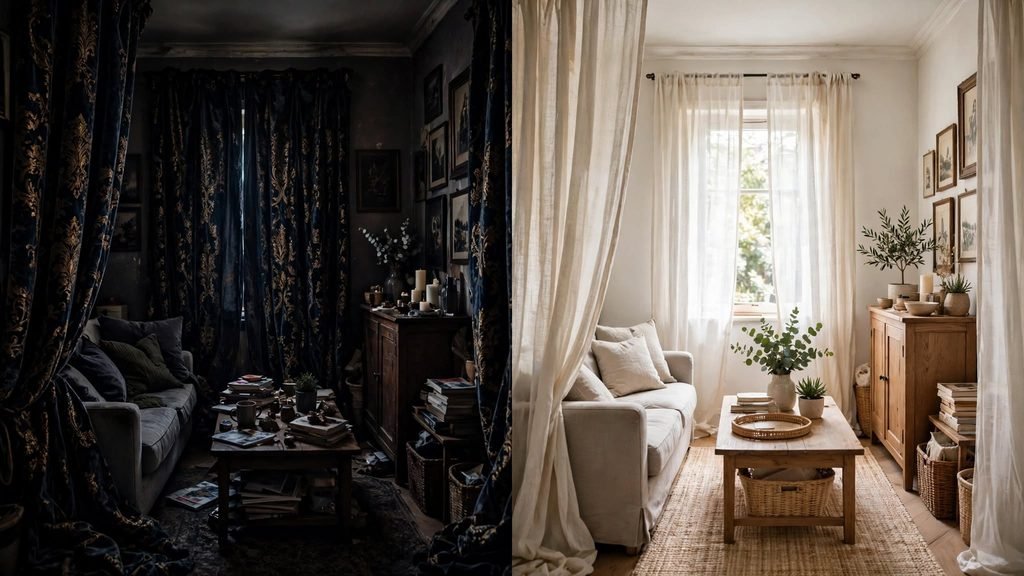
Velvet, heavily embroidered materials, thick brocade, and multiple layers can visually dominate a small window. When the curtains occupy too much visual space, the room may feel darker and less open.
Why It Makes Your Room Look Smaller
Heavy fabrics block more natural light and create substantial folds. If the curtains remain closed throughout the day, the room can lose its brightness and appear enclosed.
This does not mean you must avoid luxurious fabrics. The key is choosing the right weight and using heavier materials strategically.
How to Fix It
Consider lightweight or medium-weight fabrics that allow daylight to filter through while maintaining privacy.
Good choices include:
- Linen and linen-blend curtains.
- Lightweight cotton panels.
- Soft voile curtains.
- Textured sheer fabrics.
- Medium-weight neutral drapes.
For a sophisticated look, combine sheer curtains with a single layer of heavier side panels. Keep the heavier panels open during the day to expose as much of the window as possible.
Styling tip: Choose subtle fabric textures instead of oversized embroidery or bulky decorative details. You can achieve an expensive-looking finish without overwhelming the room.
3. Selecting Dark Curtains Without Considering Room Size
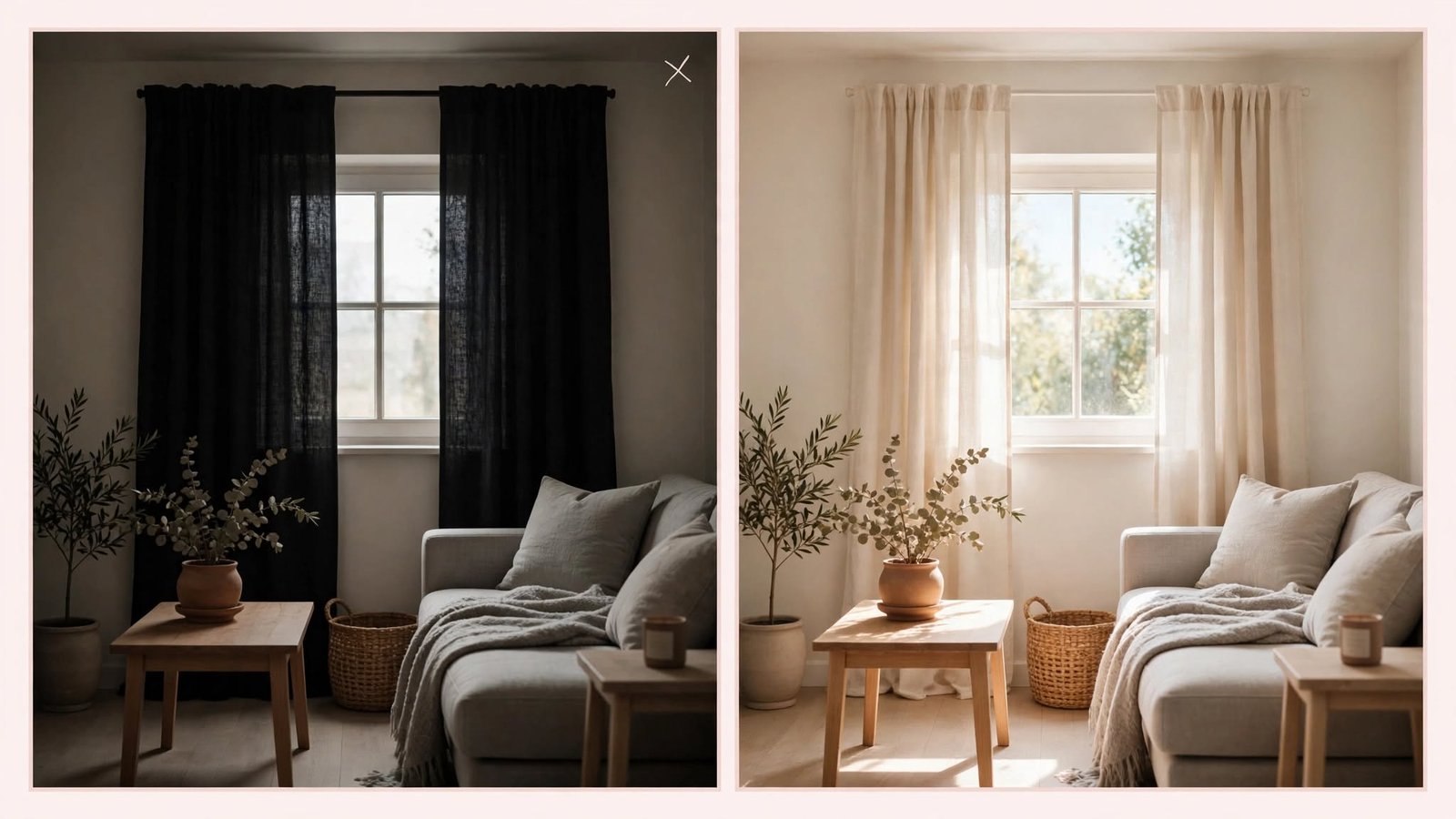
Deep colors can add drama, character, and sophistication to an interior. However, choosing dark curtains without considering the room’s lighting and proportions can make a small space feel visually heavier.
Colors such as charcoal, chocolate brown, burgundy, and deep navy can dominate a compact room when paired with dark walls, bulky furniture, and limited natural light.
Why It Makes Your Room Look Smaller
Large areas of dark fabric can absorb light and create a strong visual contrast around the window. This may make the window appear smaller and the surrounding wall feel heavier.
The problem is not dark colors themselves. It is using them without balancing the rest of the room.
How to Fix It
For smaller spaces, consider lighter curtain shades such as:
- Warm ivory.
- Soft beige.
- Champagne.
- Pale greige.
- Dusty blush.
- Light taupe.
- Soft sage.
If you love dramatic colors, use them as accent panels rather than covering the entire window with heavy dark fabric.
For example, champagne sheer curtains with deep emerald side panels can create an elegant contrast while preserving an open appearance.
Styling tip: Match the curtain color closely to the wall color when you want a seamless, spacious effect. A low-contrast palette helps the walls and windows feel visually connected.
4. Using Curtains That Are Too Short or Too Narrow
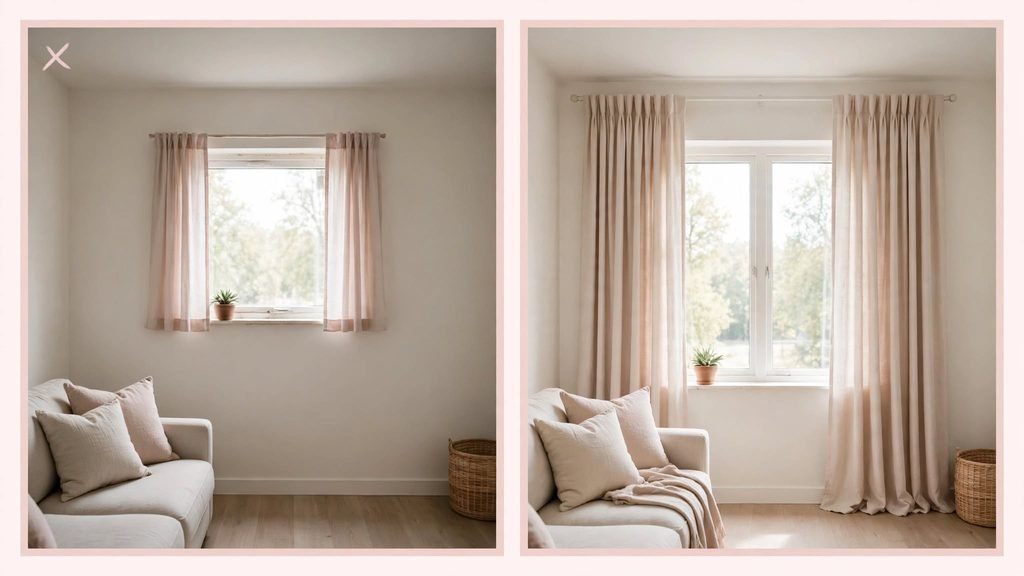
Curtain dimensions are just as important as color and fabric. Panels that stop above the floor or barely cover the window can make an interior look unfinished.
Short curtains create a horizontal break in the wall, while narrow curtains can make the window appear smaller than it actually is.
Why It Makes Your Room Look Smaller
When curtains are too short, they interrupt the vertical flow of the room. The eye notices the exposed wall below the fabric, which can make the ceiling feel lower.
Narrow panels also fail to frame the window properly, making the entire arrangement look undersized.
How to Fix It
Measure your window and the distance from the curtain rod to the floor before purchasing fabric.
Follow these guidelines:
- Extend curtain rods beyond the window frame to expose more glass when the curtains are open.
- Choose panels wide enough to create attractive folds when closed.
- Let curtains reach the floor for a polished, elongated appearance.
- Avoid panels that end awkwardly above the floor.
For a tailored appearance, curtains can lightly touch the floor. If you prefer a cleaner modern style, let them finish just above the floor without creating a visible gap.
Styling tip: Full-length curtains in a small bedroom can make the wall feel taller and create a more refined, hotel-inspired atmosphere.
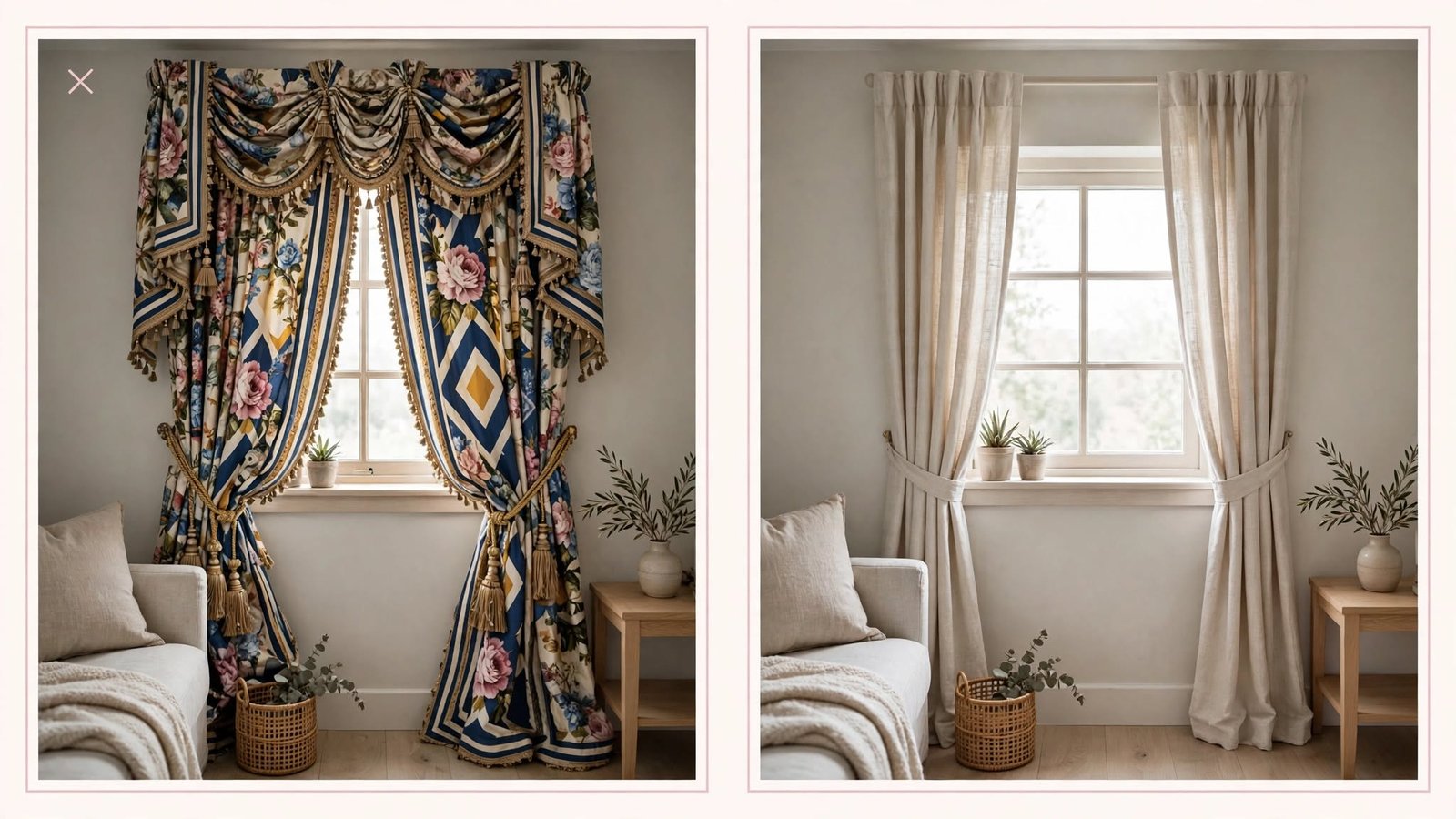
5. Choosing Overly Complicated Curtain Designs
Decorative curtains can be beautiful, but too many design elements around a small window can make the room feel busy.
Oversized floral prints, large geometric patterns, elaborate valances, multiple contrasting borders, and excessive tiebacks can compete with furniture and other decorative features.
Why It Makes Your Room Look Smaller
A small room has limited visual space. When curtains feature too many patterns, colors, and decorative details, they draw attention away from the overall interior.
Instead of creating a balanced focal point, the window treatment can make the wall appear crowded.
How to Fix It
Choose curtain designs that complement your existing interior style.
Consider these options:
- Minimal geometric patterns for modern rooms.
- Delicate floral prints for traditional bedrooms.
- Subtle stripes for a taller visual effect.
- Tone-on-tone patterns for elegant interiors.
- Plain textured curtains for minimalist spaces.
If your room already contains patterned rugs, colorful cushions, or statement furniture, simple curtains will help maintain visual balance.
Styling tip: Let one element become the main attraction. If you have dramatic floral curtains, keep the surrounding furniture and accessories relatively understated.
Bonus: How to Make a Small Room Look Bigger With Curtains
Avoiding common mistakes is important, but a few thoughtful styling decisions can make an even greater difference.
Choose Floor-to-Ceiling Curtains
Long curtains create an uninterrupted vertical line, helping the room feel taller. This works particularly well in compact bedrooms and apartments.
Keep the Window Area Uncluttered
Avoid placing large furniture directly in front of the window. When possible, keep the curtain panels open during the day to allow natural light into the room.
Use a Simple Color Palette
Curtains that coordinate with the walls, bedding, rugs, and furniture create a cohesive interior. Similar shades reduce visual interruptions and help the room feel more spacious.
Select the Right Curtain Hardware
Slim curtain rods, ceiling-mounted tracks, and understated brackets create a cleaner finish. Avoid oversized hardware that visually dominates a small window.
Balance Privacy and Natural Light
If privacy is important, consider sheer curtains or light-filtering fabrics. You can layer them with blackout panels for nighttime use without keeping the room dark throughout the day.
Frequently Asked Questions
1. What type of curtains make a small room look bigger?
Lightweight, floor-length curtains in soft neutral shades can make a small room feel taller and brighter. Linen, cotton, and sheer fabrics are popular options.
2. Should curtains be lighter or darker than the walls?
For a more spacious appearance, choose curtains that are close to your wall color or slightly lighter. Darker curtains can also work when the room has sufficient natural light and a balanced color scheme.
3. Do long curtains make a room look bigger?
Yes. Floor-length curtains can create a vertical visual line that makes walls appear taller. Hanging the curtain rod closer to the ceiling can strengthen this effect.
4. Are heavy curtains suitable for small bedrooms?
They can be used, but avoid excessively bulky fabrics and oversized patterns. Medium-weight curtains with a simple design are often easier to balance in compact bedrooms.
5. Should curtains cover the entire window?
Curtain panels should be wide enough to frame the window properly. Extending the rod beyond the window frame allows the panels to sit outside the glass when open, helping maximize the visible window area.
Final Thoughts
The right curtains can make a remarkable difference in how a room looks and feels. You do not need expensive furniture or a complete interior makeover to create a more spacious atmosphere.
Start by correcting the five common curtain mistakes that make your room look smaller: hanging rods too low, selecting overly heavy fabrics, choosing unbalanced dark colors, using incorrect panel dimensions, and adding unnecessarily complicated designs.
Focus on proper measurements, floor-length panels, balanced colors, and fabrics that complement your natural light.
A thoughtfully styled window can make even a small room feel taller, brighter, more elegant, and beautifully put together.Curtains can completely transform the appearance of a room. The right fabric, color, length, and hanging style can make a small bedroom or living room feel taller, brighter, and more spacious. However, the wrong choices can have the opposite effect. Even a beautifully decorated room can feel cramped when its window treatments are poorly selected.
Many homeowners focus on furniture, wall colors, and decorative accessories but overlook how much curtains influence the proportions of a space. Heavy fabrics, incorrect lengths, bulky designs, and poorly positioned curtain rods can make windows appear smaller and ceilings feel lower.
Understanding the most common curtain mistakes that make a room look smaller can help you create a more open and balanced interior without renovating or purchasing expensive furniture.