
Introduction: The Timeless Beauty of European Heritage Curtains
European Heritage Curtains bring an extraordinary combination of history, craftsmanship, elegance, and luxury into modern homes. Inspired by the grand interiors of French châteaux, Italian villas, English country houses, and Mediterranean residences, these curtains transform ordinary windows into beautiful architectural features.
Unlike ordinary window treatments, European Heritage Curtains celebrate the beauty of carefully selected fabrics, sophisticated patterns, decorative trims, rich colors, and graceful silhouettes. Their charm comes from the way traditional design elements blend with modern comfort.
Whether you prefer the romantic appearance of French floral drapes, the dramatic elegance of Italian velvet, or the relaxed beauty of Mediterranean linen, there is a European-inspired curtain style for every room.
The best part is that you do not need a historical mansion to recreate this aesthetic. With the right fabric, color palette, curtain length, and finishing details, you can introduce European elegance into a small apartment, contemporary living room, luxurious bedroom, or traditional dining space.
In this guide, we explore 18 European Heritage Curtains styles that make rooms look expensive without requiring an entirely new interior. Each idea includes practical styling advice to help you recreate the look beautifully.
1. French Château Curtains: Romantic Elegance with Floral Details
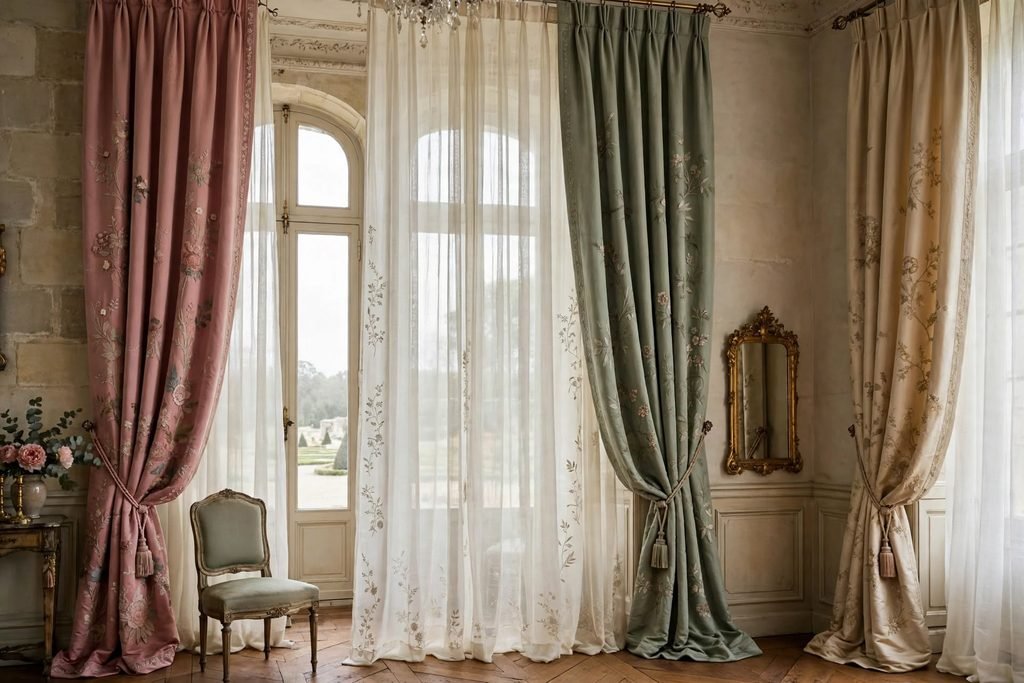
château interiors are famous for their graceful proportions, luxurious fabrics, and romantic atmosphere. French-inspired European Heritage Curtains recreate this timeless beauty through delicate floral patterns, soft pleats, and beautifully finished edges.
Choose dusty rose, antique ivory, muted sage, or champagne-colored fabric. Add subtle embroidered flowers or delicate botanical patterns to create an authentic French appearance.
For a more luxurious result, combine sheer ivory curtains with heavier floral drapes. Allow the fabric to fall naturally from ceiling height to the floor.
How to style it:
- Choose soft floral prints with vintage-inspired details.
- Add antique gold curtain rods and elegant finials.
- Pair the curtains with carved wooden furniture and upholstered chairs.
- Use matching cushions to create a coordinated appearance.
Designer tip: Avoid overly bright floral prints. Muted colors and delicate patterns create a more authentic château-inspired atmosphere.
2. Italian Velvet Curtains: Deep Colors with Palace-Like Drama
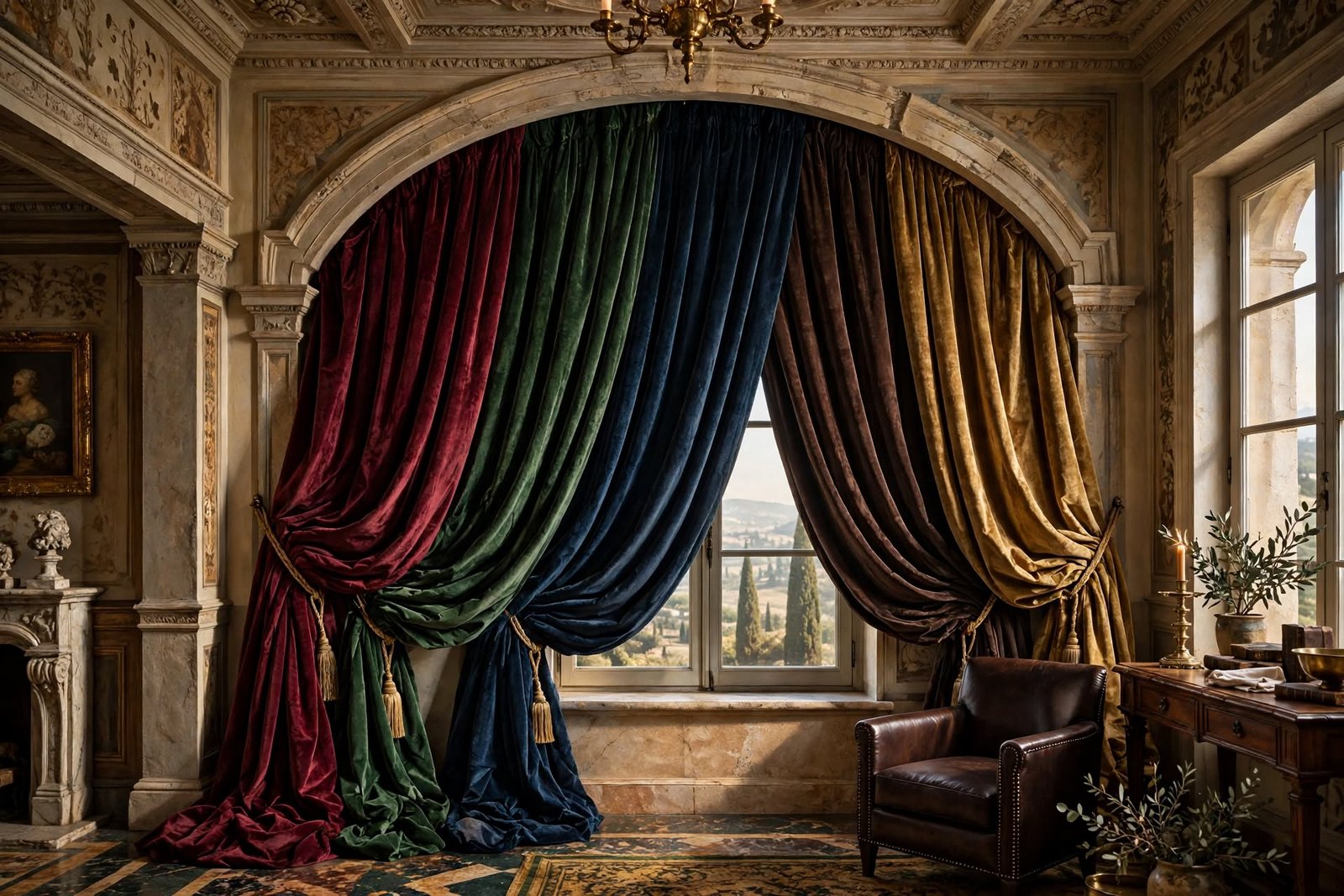
Italian interiors often combine dramatic colors, luxurious materials, and timeless architectural details. Italian velvet is an excellent choice when you want European Heritage Curtains to become the focal point of a room.
Think of deep burgundy, forest green, midnight blue, chocolate brown, and antique gold. These shades create depth and make ordinary spaces feel more sophisticated.
Choose thick velvet panels with generous folds. Their natural texture creates beautiful shadows and gives windows a rich, layered appearance.
How to style it:
- Select heavyweight velvet with a soft, elegant finish.
- Install antique brass or brushed gold curtain hardware.
- Pair dark curtains with cream walls and warm wooden furniture.
- Add subtle gold decorative accessories.
Designer tip: Use velvet curtains in rooms with sufficient visual balance. Pairing dark fabrics with lighter upholstery prevents the interior from feeling overcrowded.
3. English Countryside Curtains: Delicate Florals and Natural Charm
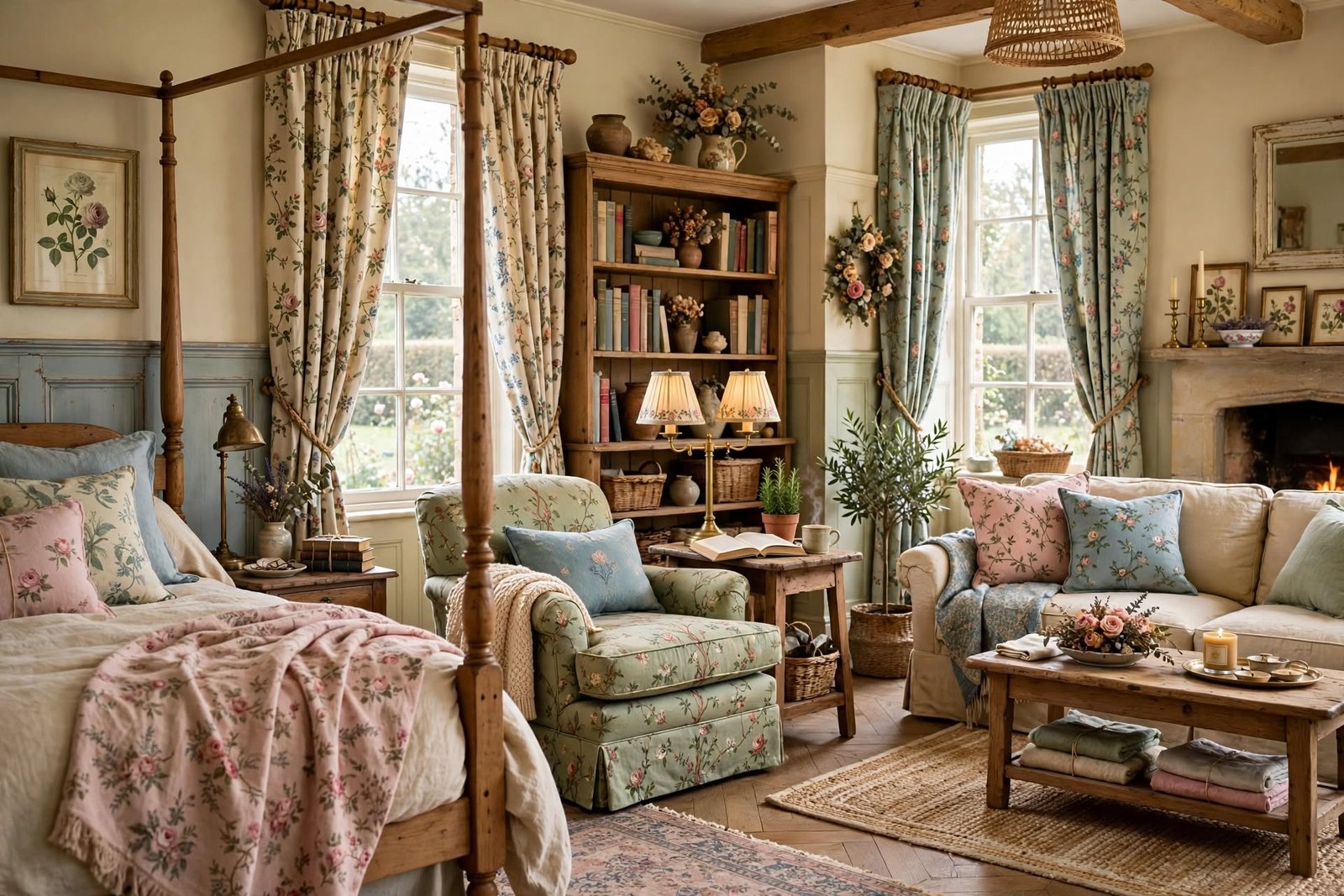
English countryside interiors celebrate traditional florals, comfortable furniture, and natural materials. This style is perfect for anyone who prefers a welcoming room with a refined vintage appearance.
Choose small-scale roses, climbing vines, delicate leaves, and classic garden-inspired prints. Soft green, faded blue, warm cream, and dusty pink are beautiful choices.
These European Heritage Curtains work particularly well in bedrooms, reading corners, and traditional living rooms.
How to style it:
- Choose cotton or linen-blend floral fabric.
- Use wooden curtain poles for a traditional appearance.
- Coordinate the curtains with patterned cushions.
- Add vintage lamps, books, and natural wooden furniture.
Designer tip: Combine one floral curtain pattern with solid-colored upholstery. Too many competing prints can make the room appear visually busy.
4. French Toile Curtains: The Beauty of Traditional Storytelling Prints
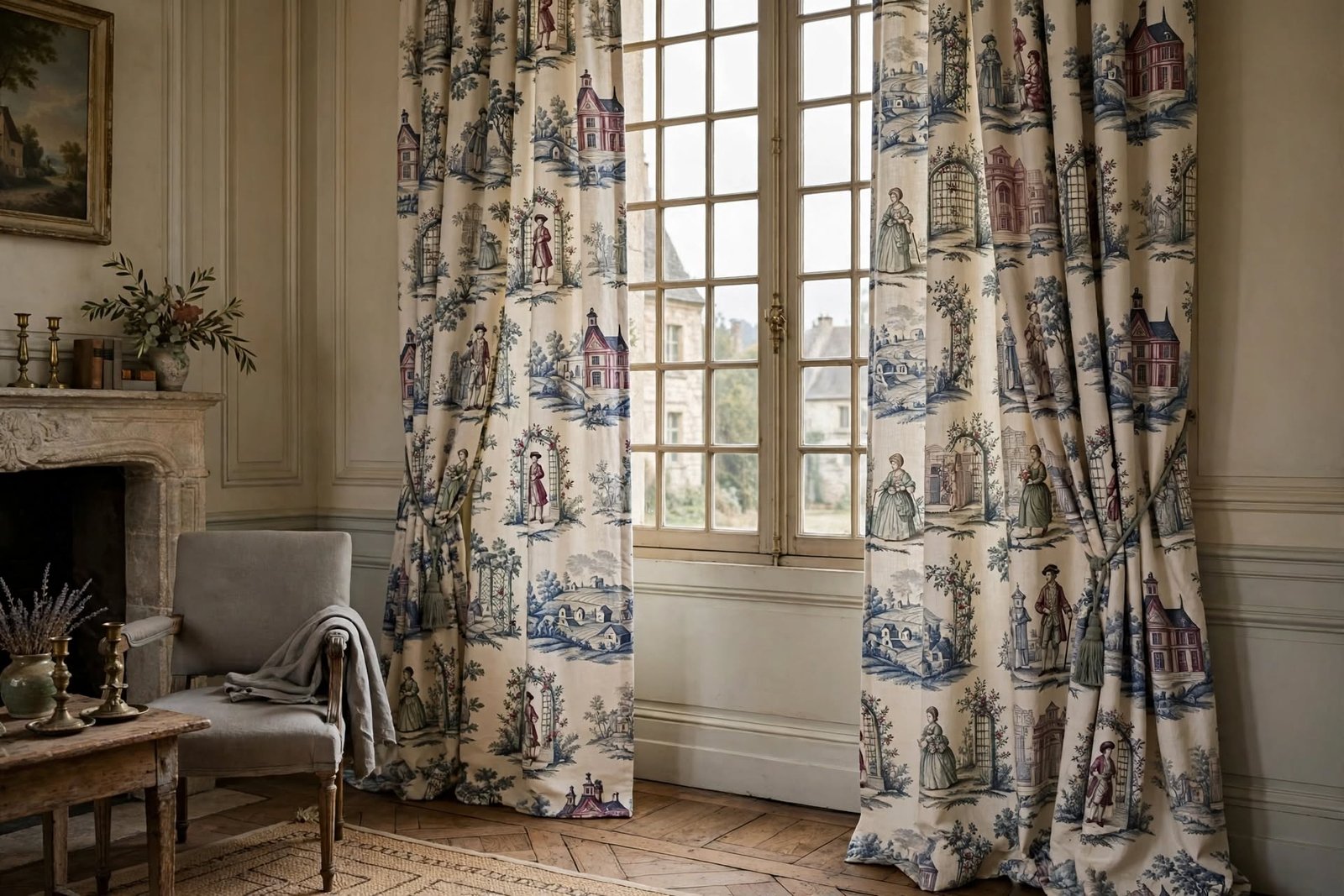
French toile is one of the most recognizable patterns in traditional European interiors. Its delicate illustrations often feature countryside landscapes, gardens, architectural scenes, and historical figures.
These European Heritage Curtains introduce an artistic element without requiring bright colors or complicated decoration.
Traditional toile commonly appears in navy blue, burgundy, soft gray, and muted green against ivory or cream backgrounds.
How to style it:
- Choose a traditional toile pattern in a restrained color palette.
- Use full-length panels with simple pleats.
- Combine the print with neutral walls.
- Add antique-inspired furniture and ceramic accessories.
Designer tip: Let toile curtains become the main patterned feature in the room. Keep surrounding fabrics relatively simple.
5. Mediterranean Linen Curtains: Relaxed European Sophistication
Mediterranean interiors are known for natural textures, earthy colors, and relaxed elegance. Linen curtains capture this atmosphere beautifully.
For this version of European Heritage Curtains, choose natural beige, warm white, terracotta, olive, or sandy brown.
The slightly textured surface of linen creates an organic appearance that feels luxurious without looking overly formal.

How to style it:
- Select lightweight linen or linen-blend fabric.
- Choose relaxed pleats or soft wave folds.
- Use wooden or aged-brass curtain rods.
- Combine with stone textures, ceramic accessories, and warm neutral furniture.
Designer tip: Allow linen panels to reach the floor. Their natural movement creates a softer and more expensive-looking finish.
6. Victorian Embroidered Curtains: Intricate Details and Vintage Luxury
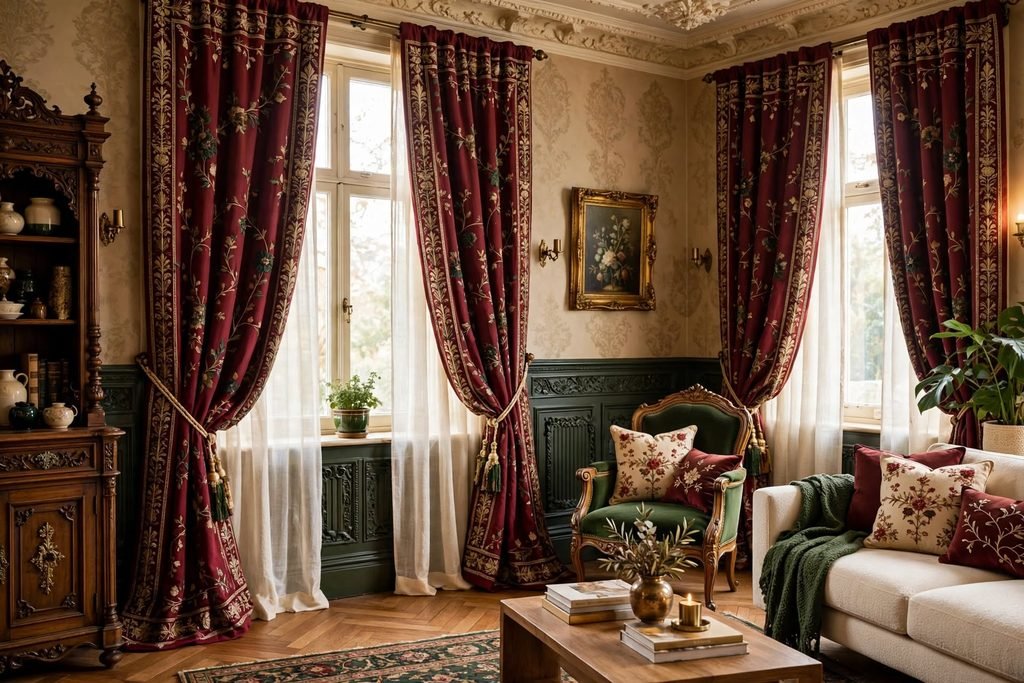
Victorian interiors are associated with decorative craftsmanship, elaborate furniture, and richly detailed fabrics. Embroidered curtains bring some of that historical elegance into contemporary homes.
Choose curtains featuring subtle floral embroidery, ornamental borders, delicate vines, or traditional repeating motifs.
For an authentic appearance, consider burgundy, antique gold, deep green, and warm ivory.
How to style it:
- Select embroidered fabric with visible texture.
- Choose decorative curtain poles with traditional finials.
- Pair with vintage furniture and carved wooden details.
- Introduce embroidered cushions in complementary colors.
Designer tip: Choose embroidery that is visible but not excessively heavy. Fine detailing often looks more sophisticated than oversized decoration.
7. French Provincial Curtains: Soft Neutrals and Graceful Pleats
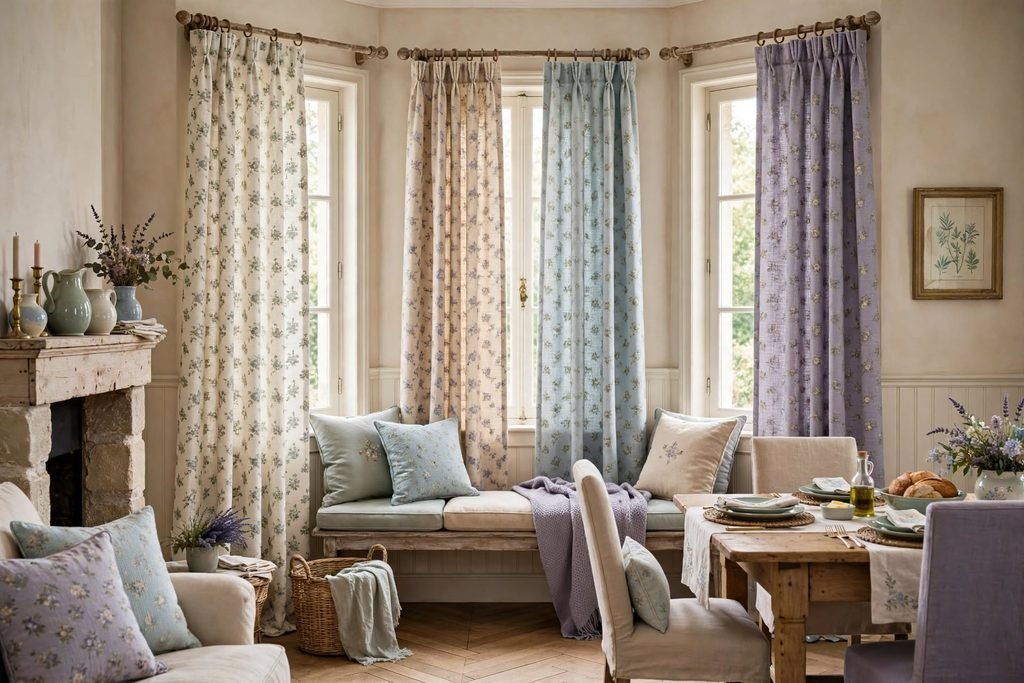
French provincial design combines rustic comfort with understated elegance. It is an excellent option for rooms that need a traditional appearance without looking excessively formal.
Choose ivory, pale blue, warm beige, dusty lavender, or muted sage. Small floral patterns and subtle woven textures work particularly well.
These European Heritage Curtains are suitable for bedrooms, family living rooms, and dining spaces.
How to style it:
- Use lightweight cotton, linen, or textured blends.
- Add pinch pleats for a traditional finish.
- Choose aged-brass or wooden curtain hardware.
- Pair with distressed wooden furniture and soft upholstery.
Designer tip: Use a restrained color palette throughout the room to preserve the effortless French provincial character.
8. Italian Renaissance Drapes: Rich Patterns and Artistic Grandeur
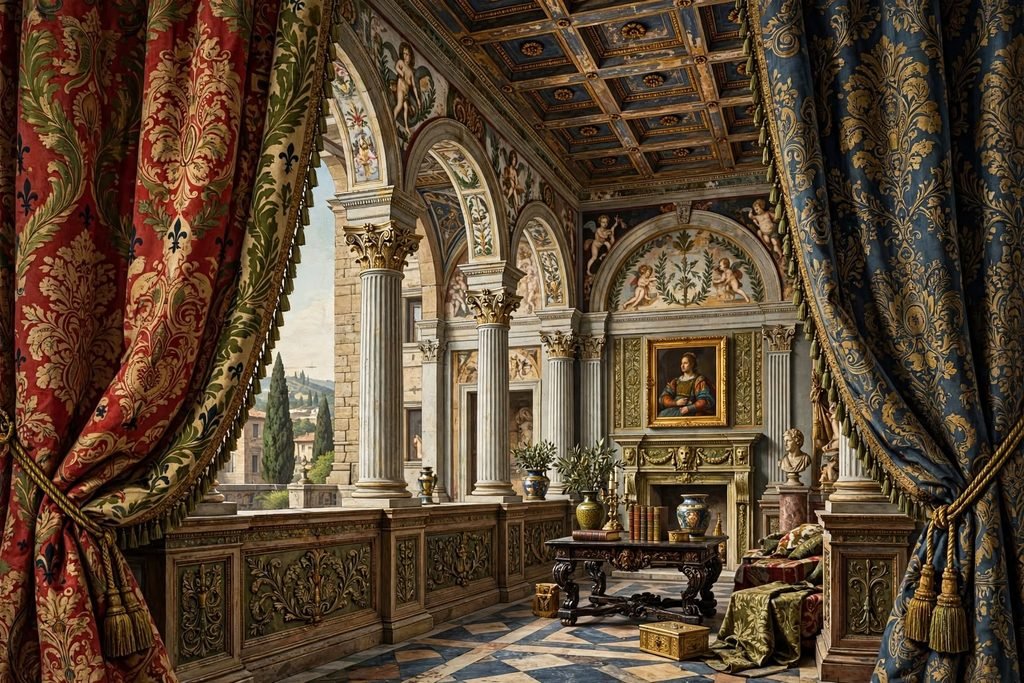
Italian Renaissance interiors draw inspiration from historical architecture, classical art, and decorative craftsmanship.
For this curtain style, look for elaborate damask patterns, ornamental motifs, and rich woven textures.
Deep red, antique gold, olive green, and dark blue create a dramatic traditional appearance.
How to style it:
- Select damask or jacquard fabric.
- Choose generous fabric fullness for deeper folds.
- Use decorative brass curtain rods.
- Pair with carved furniture, classical artwork, and warm lighting.
Designer tip: Use Renaissance-inspired curtains in rooms with relatively simple walls so the intricate fabric remains visually impressive.
9. Belgian Heritage Curtains: Minimalism with Traditional Texture
Belgian interiors combine old-world architecture with understated modern styling. This makes them ideal for homeowners who appreciate traditional materials but prefer uncluttered spaces.
Choose natural linen, soft cotton, and textured neutral fabrics.
Warm gray, stone, mushroom, oatmeal, and ivory create a sophisticated foundation.

How to style it:
- Choose unlined or lightly lined linen-look panels.
- Use simple black or antique-brass curtain rods.
- Pair with natural wood and stone finishes.
- Keep furniture silhouettes clean and comfortable.
Designer tip: Focus on fabric quality and natural texture rather than decorative embellishments.
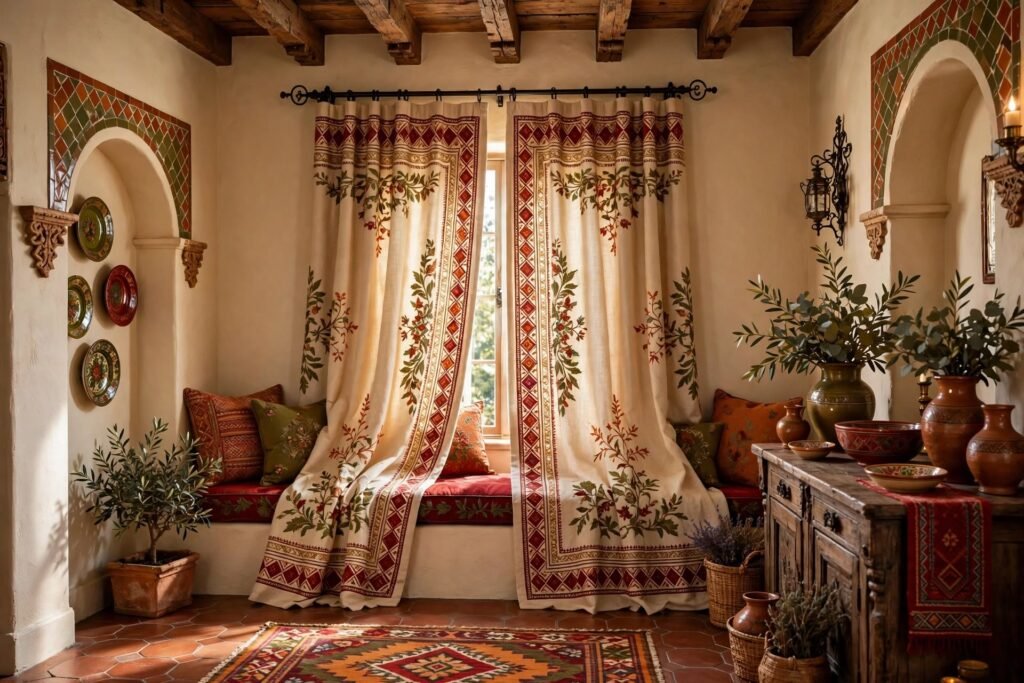
10. Spanish Heritage Curtains: Terracotta Warmth and Ornamental Beauty
Spanish-inspired interiors combine warm earthy colors, traditional craftsmanship, and decorative architectural details.
These European Heritage Curtains can feature geometric borders, subtle embroidery, or traditional floral patterns.
Terracotta, burnt orange, deep red, olive green, and warm cream are excellent color choices.
How to style it:
- Choose textured cotton or decorative woven fabric.
- Incorporate embroidered borders.
- Use dark wooden curtain poles.
- Pair with handmade ceramics and warm-toned furniture.
Designer tip: Introduce terracotta through the curtains while keeping larger furniture pieces in neutral shades.
11. Baroque Damask Curtains: An Opulent Traditional Statement
Baroque design is known for elaborate patterns, dramatic compositions, and decorative richness.
Damask curtains are particularly effective for recreating this look because their woven patterns create depth even when they use only two colors.
Consider emerald and gold, burgundy and champagne, navy and silver, or chocolate and ivory.

How to style it:
- Select high-quality jacquard or damask fabric.
- Choose full-length panels with structured pleats.
- Add traditional curtain holdbacks.
- Pair with elegant upholstered furniture.
Designer tip: Use patterned curtains with plain walls and restrained accessories. This creates a more polished result.
12. French Striped Curtains: Understated Parisian Character
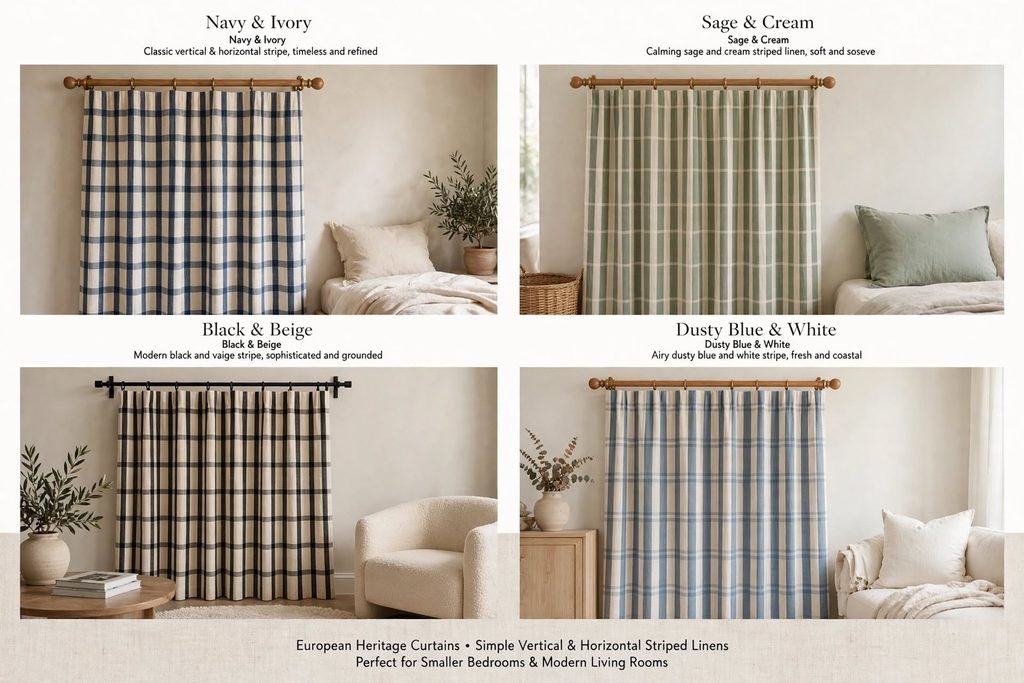
French interiors often use simple stripes to create a balanced and timeless appearance.
Instead of complicated patterns, choose vertical or horizontal stripes in navy and ivory, sage and cream, black and beige, or dusty blue and white.
These European Heritage Curtains work particularly well in smaller bedrooms and modern living rooms.
How to style it:
- Select medium-width stripes.
- Use relaxed wave or pinch pleats.
- Pair with neutral furniture.
- Add a few traditional accessories for character.
Designer tip: Vertical stripes can create the visual impression of greater ceiling height when installed close to the ceiling.
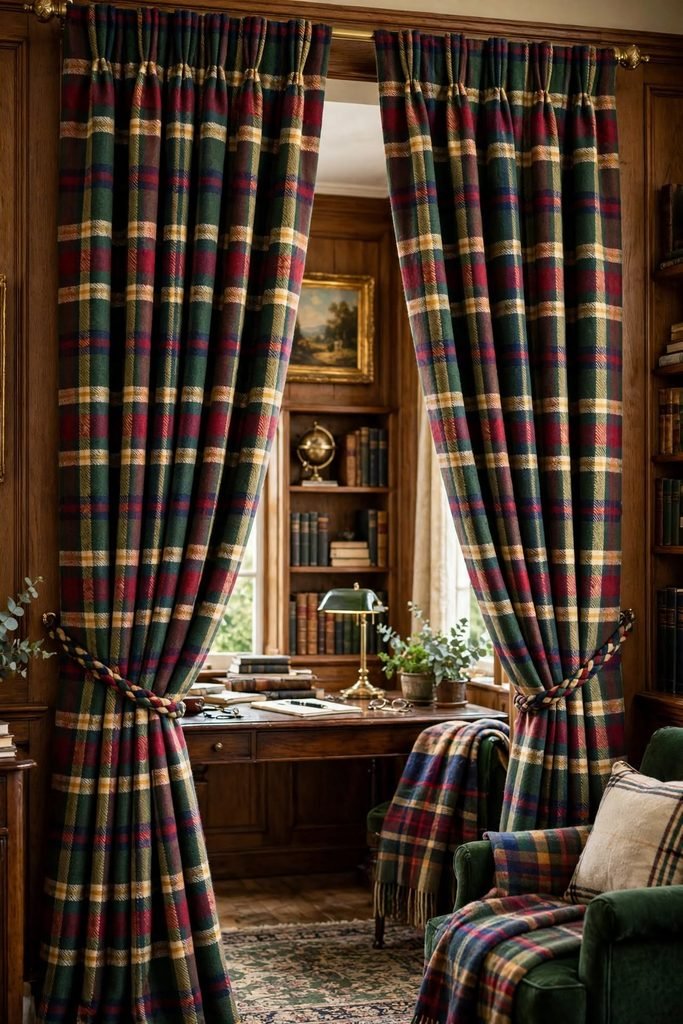
13. English Tartan Curtains: Classic Heritage with a Cozy Finisartan is a traditional textile pattern associated with Scottish and English heritage interiors.
Its intersecting lines and rich color combinations create a distinctive appearance that works beautifully in reading rooms, bedrooms, and traditional studies.
Consider forest green, burgundy, navy, mustard, and cream combinations.
How to style it:
- Choose medium-scale tartan patterns.
- Use heavier cotton or wool-blend fabrics.
- Pair with leather furniture and dark wooden accents.
- Introduce solid-colored cushions to balance the pattern.
Designer tip: Avoid combining several different tartan patterns in one small room. One statement textile is usually sufficient.
14. Rococo-Inspired Curtains: Curved Details and Romantic Colors
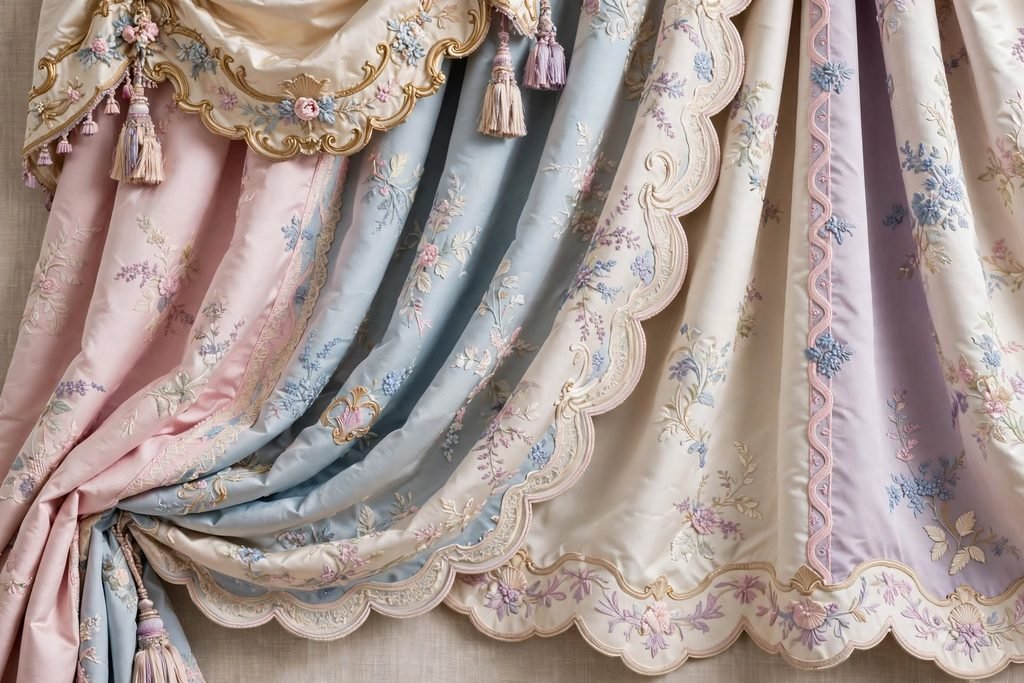
Rococo design celebrates delicate ornamentation, graceful curves, and romantic color palettes.
For this interpretation, choose curtains in pale pink, powder blue, soft champagne, lavender, or warm ivory.
Look for subtle floral embroidery, scalloped borders, and decorative fabric details.
How to style it:
- Choose soft satin, silk-look, or textured cotton.
- Incorporate delicate decorative trims.
- Use elegant curtain rods with curved finials.
- Pair with rounded furniture and ornamental mirrors.
Designer tip: Keep the decorative details delicate. A modern interpretation of Rococo should feel graceful rather than excessively elaborate.
15. Tuscan Farmhouse Curtains: Rustic Materials with Old-World Charm
Tuscan interiors celebrate natural materials, earthy colors, and relaxed traditional living.
These European Heritage Curtains look beautiful in kitchens, dining rooms, and comfortable living spaces.
Choose olive green, muted gold, warm beige, terracotta, and creamy white.
Natural linen, cotton, and lightly textured fabrics work especially well.
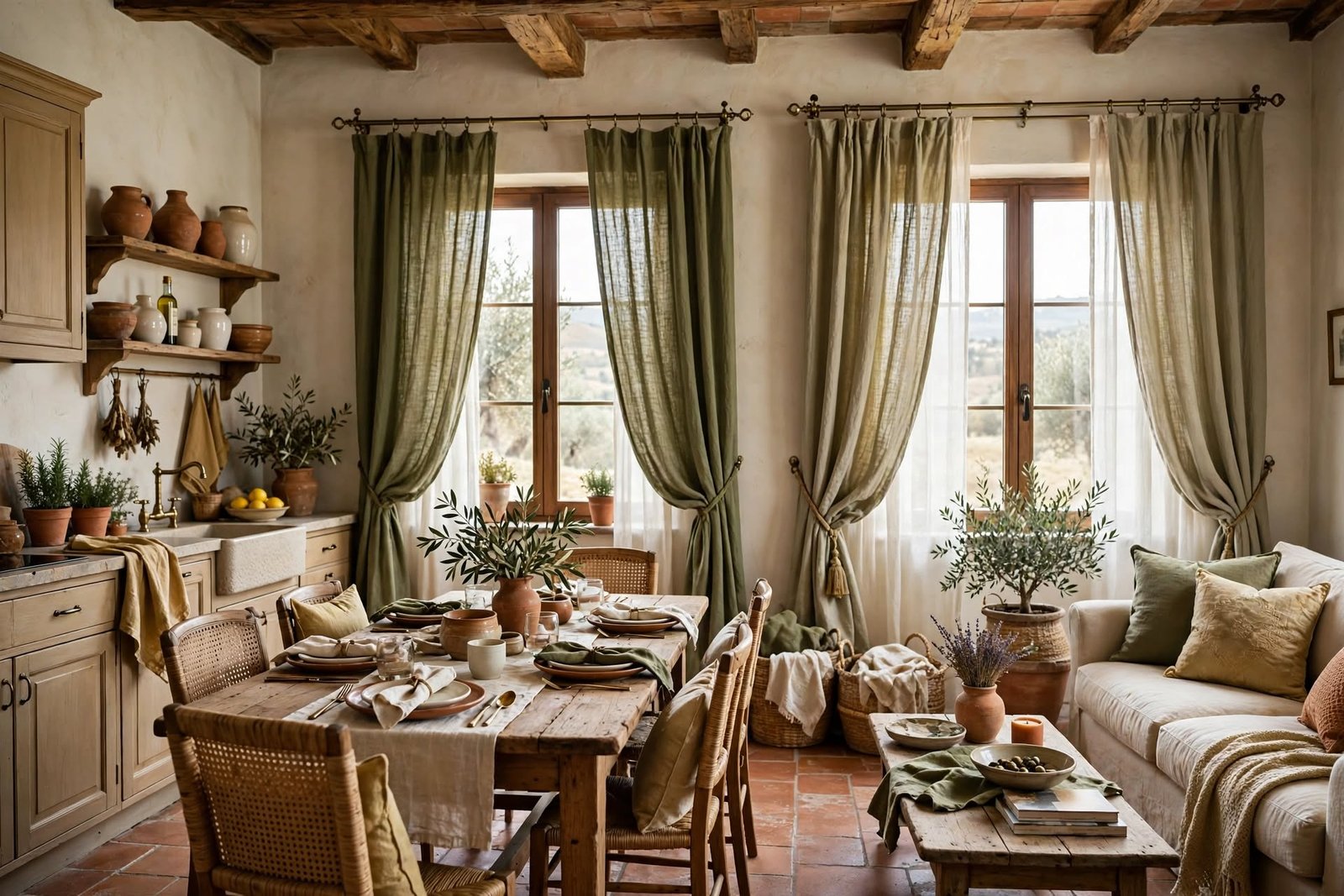
How to style it:
- Use simple full-length panels or relaxed café curtains.
- Choose natural wooden curtain rods.
- Pair with rustic furniture and handmade ceramics.
- Introduce olive branches or other understated greenery.
Designer tip: Avoid overly shiny fabrics. Natural textures create a more authentic Tuscan farmhouse atmosphere.
16. French Silk Curtains: Subtle Sheen and Refined Luxury
Silk has long been associated with elegant traditional interiors. Its natural sheen gives windows a beautiful appearance, especially when paired with graceful pleats.
For these European Heritage Curtains, consider champagne, pearl, antique rose, muted gold, and soft taupe.
Silk-look fabrics are also practical alternatives for homeowners who want a similar visual effect with easier maintenance.

How to style it:
- Choose silk or a high-quality silk-look material.
- Use structured pleats for a tailored finish.
- Pair with understated metallic hardware.
- Coordinate with elegant upholstery and soft lighting.
Designer tip: Consider lined silk curtains to help protect delicate fabric from sunlight and improve their drape.
17. Gothic European Curtains: Dramatic Colors and Historical Elegance
Gothic-inspired European interiors bring together dramatic architecture, dark colors, and rich traditional textures.
This curtain style works particularly well in rooms with high ceilings, antique-inspired furniture, and distinctive decorative details.
Choose black, deep plum, oxblood, forest green, or charcoal.
Velvet, jacquard, and heavy textured fabrics create an especially luxurious finish.
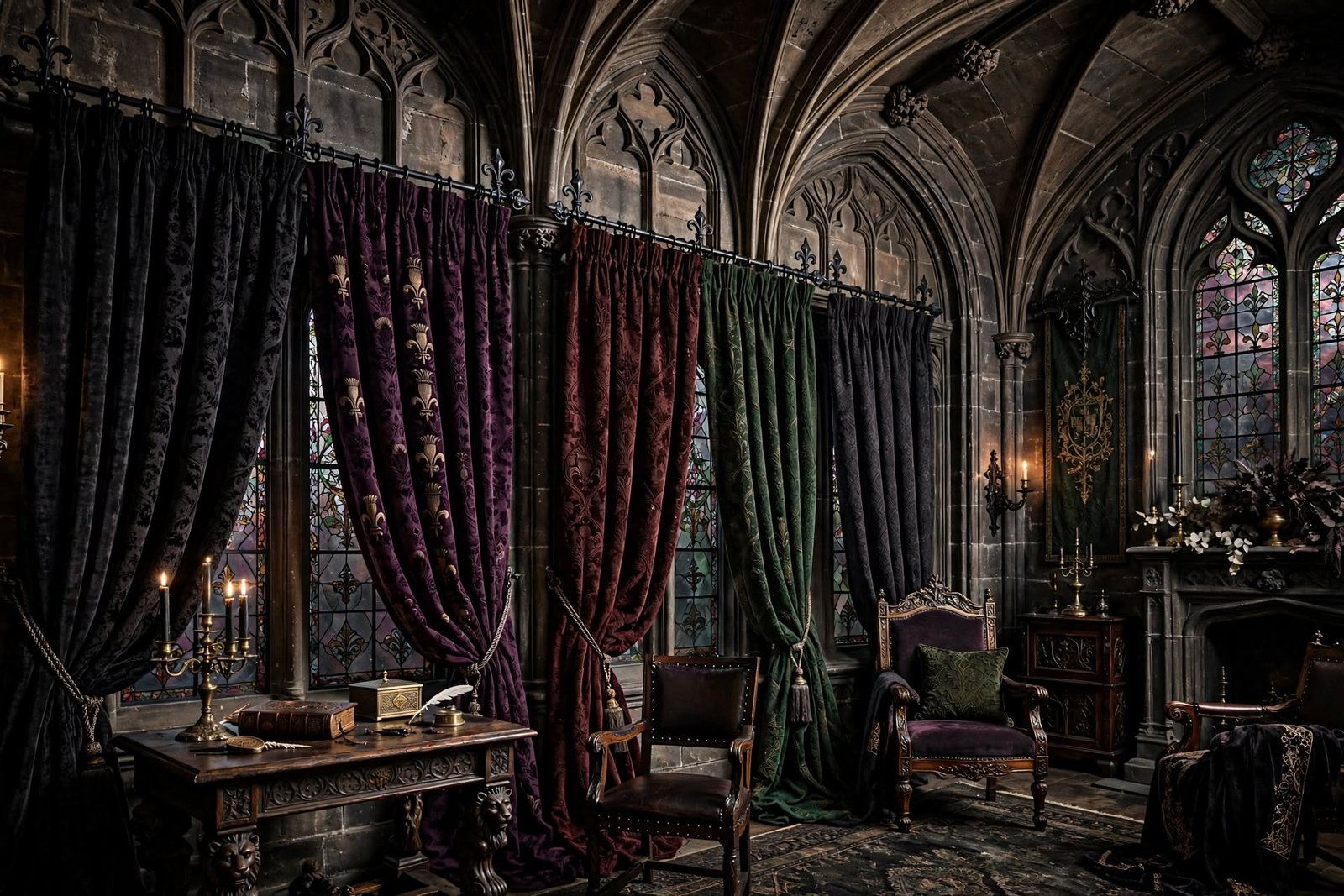
How to style it:
- Select heavyweight velvet or patterned jacquard.
- Use blackened brass or antique gold hardware.
- Pair with dark wooden furniture.
- Introduce warm lighting to balance the deeper colors.
Designer tip: Combine dark curtains with one or two lighter elements, such as cream upholstery or a pale rug, to maintain visual depth.
18. Contemporary European Heritage Curtains: Traditional Beauty Meets Modern Living
You do not have to recreate an entirely historical interior to enjoy European Heritage Curtains. Contemporary European styling combines classic materials and traditional details with clean furniture and modern layouts.
Choose muted damask patterns, textured linen, subtle embroidery, or understated stripes.
A sophisticated palette might include warm ivory, olive, charcoal, muted blue, and antique gold.
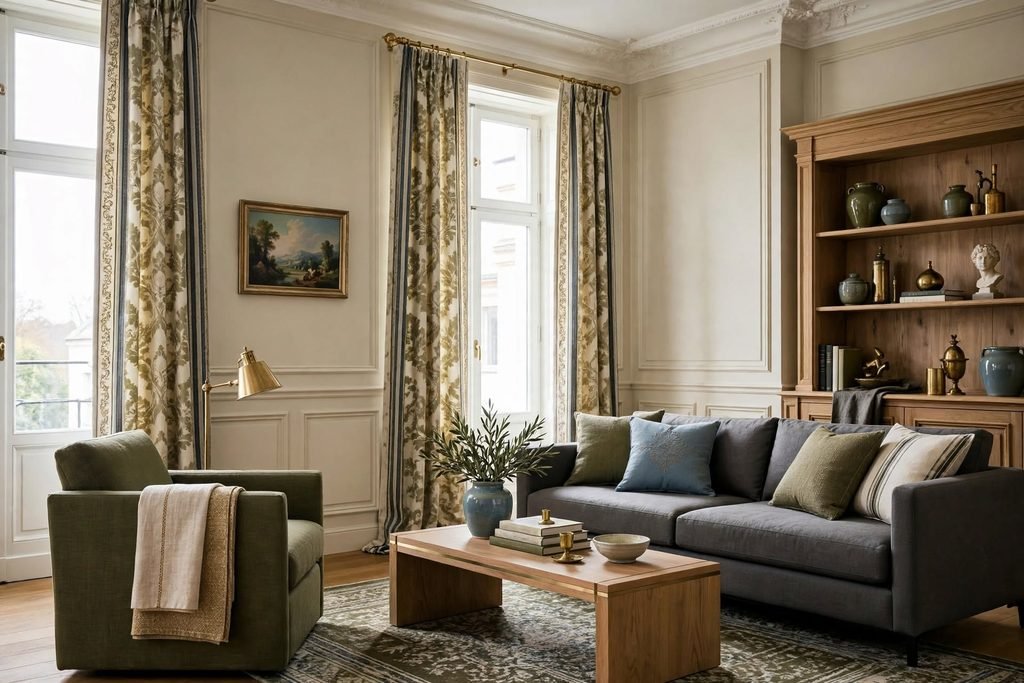
How to style it:
- Choose traditional fabrics in simplified patterns.
- Install ceiling-height curtain tracks.
- Combine classic drapes with contemporary furniture.
- Keep decorative accessories minimal.
- Use layered sheers for privacy and heavier panels for visual depth.
Designer tip: Combine one traditional feature with two or three modern elements. This creates a balanced interior that feels timeless rather than outdated.
How to Choose the Perfect European Heritage Curtains for Your Room
Choosing the right European Heritage Curtains involves more than selecting an attractive pattern. The fabric, color, room proportions, and surrounding furniture all influence the final appearance.
Consider these important factors before purchasing:
1. Match the fabric to the room
- Velvet works beautifully in formal living rooms and luxurious bedrooms.
- Linen creates a relaxed Mediterranean or Belgian appearance.
- Silk-look fabrics introduce elegance into traditional interiors.
- Cotton is practical for everyday family spaces.
2. Select colors that complement your furniture
Choose curtain colors that connect with your existing furniture, rugs, cushions, and wall finishes. Emerald, burgundy, champagne, olive, and antique ivory are particularly effective for traditional European interiors.
3. Choose the right curtain length
Full-length curtains generally create a more elegant appearance. Mounting the curtain rod close to the ceiling can also make windows appear taller.
4. Pay attention to curtain hardware
Antique brass, brushed gold, dark bronze, and carved wooden poles can enhance the traditional character of European Heritage Curtains.
5. Balance traditional and contemporary elements
You do not need every piece of furniture to look vintage. Combining heritage-inspired curtains with modern furniture creates an interesting and sophisticated contrast.
Common Mistakes to Avoid When Styling European Heritage Curtains
Even beautiful fabrics can look less impressive when styled incorrectly. Avoid these mistakes:
- Choosing excessively busy patterns: Combine one statement pattern with simpler surrounding fabrics.
- Using curtains that are too short: Full-length panels usually create a more refined appearance.
- Ignoring fabric quality: Cheap-looking fabric can undermine an otherwise beautiful interior.
- Overusing decorative accessories: Too many tassels, trims, and ornamental details can make the room feel crowded.
- Choosing colors without considering lighting: Test fabric samples in your room before making a final decision.
- Installing narrow curtain rods: Extend the rod beyond the window frame to create a wider visual appearance.
Frequently Asked Questions
1. What are European Heritage Curtains?
European Heritage Curtains are traditional and contemporary window treatments inspired by European interior design traditions, including French, Italian, English, Spanish, and Mediterranean styles. They commonly feature luxurious fabrics, classic patterns, decorative details, and elegant finishes.
2. Which fabrics look most luxurious for European curtains?
Velvet, silk, jacquard, damask, and high-quality linen are excellent choices. Each fabric offers a different appearance, from dramatic traditional luxury to understated European elegance.
3. Which colors are best for traditional European curtains?
Popular choices include burgundy, emerald green, antique gold, champagne, dusty rose, olive, navy, and warm ivory.
4. Can European Heritage Curtains work in modern homes?
Yes. Choose traditional fabrics with simplified patterns and combine them with contemporary furniture, minimal accessories, and clean architectural details.
5. How can I make inexpensive curtains look expensive?
Choose high-quality-looking fabric, use generous fabric fullness, install elegant curtain hardware, and hang the panels close to the ceiling. Proper length and neat pleating can significantly improve their appearance.
Final Thoughts: Bring European Elegance Into Your Home
Beautiful window treatments have the power to change the entire atmosphere of a room. From French château florals and Italian velvet to Mediterranean linen and English countryside prints, each style offers a different interpretation of timeless European beauty.
The secret is to choose fabrics, colors, and patterns that complement your room rather than overwhelm it. You can recreate a historical European atmosphere, introduce subtle vintage details, or combine traditional craftsmanship with modern simplicity.
Ultimately, European Heritage Curtains are more than decorative window coverings. They are a way to bring history, artistry, texture, and timeless elegance into everyday living spaces.